
Skip to content
  • Finnish Government
    • Prime Minister's Office
    • Ministry of Defence
    • Ministry of Transport and Communications
    • Ministry for Foreign Affairs
    • Ministry of Finance
    • Ministry of Economic Affairs and Employment
    • Ministry of Justice
    • Ministry of Education and Culture
    • Ministry of Social Affairs and Health
    • Ministry of the Interior
    • Ministry of Agriculture and Forestry
    • Ministry of the Environment

Valitse kieli:

This page is in Finnish. Go to the English site »

Or choose language:

Den här sidan är på finska. Gå till den svenska versionen av sidan »

Eller välj språk:

Dát siidu lea suomagillii Sirdás davvisámegielat siidduide »

Dehe vállje giela:

Taat sijđo lii suomâkielân Sirduu anarâškielâlijd sijđoid »

Tâi valjii kielâ:

Tät seidd lij lääʹddǩiõʹlle Sirddu lääʹddǩiõllsaž seiddõʹsse »

Leʹbe vaʹlljed ǩiõl:

Язык этого сайта финский. Перейти на русскоязычный сайт »

Или выберите язык:

Cette page est en finnois. Aller sur le site en français »

Ou choisir la langue:

Diese Seite ist auf Finnisch. Wechseln Sie zur deutschen Version »

Oder wählen Sie Ihre Sprache:

Tämä sivu on englanniksi. Siirry suomenkieliseen sivustoon »

Tai valitse kieli:

Choose language:

Den här sidan är på engelska. Gå till den svenska versionen av sidan »

Eller välj språk:

Dát siidu lea eŋgelasgillii Sirdás davvisámegielat siidduide »

Dehe vállje giela:

Taat sijđo lii eŋgâlâskielân Sirduu anarâškielâlijd sijđoid »

Tâi valjii kielâ:

Tät seidd lij eŋgglõsǩiõʹlle Sirddu lääʹddǩiõllsaž seiddõʹsse »

Leʹbe vaʹlljed ǩiõl:

Язык этого сайта английский. Перейти на русскоязычный сайт »

Или выберите язык:

Cette page est en anglais. Aller sur le site en français »

Ou choisir la langue:

Diese Seite ist auf Englisch. Wechseln Sie zur deutschen Version »

Oder wählen Sie Ihre Sprache:

Tämä sivu on ruotsiksi. Siirry suomenkieliseen sivustoon »

Tai valitse kieli:

This page is in Swedish. Go to the English site »

Or choose language:

Välj språk:

Dát siidu lea ruoŧagillii Sirdás davvisámegielat siidduide »

Dehe vállje giela:

Taat sijđo lii ruotâkielân Sirduu anarâškielâlijd sijđoid »

Tâi valjii kielâ:

Tät seidd lij ruõccǩiõʹlle Sirddu lääʹddǩiõllsaž seiddõʹsse »

Leʹbe vaʹlljed ǩiõl:

Язык этого сайта шведский. Перейти на русскоязычный сайт »

Или выберите язык:

Cette page est en suédois. Aller sur le site en français »

Ou choisir la langue:

Diese Seite ist auf Schwedisch. Wechseln Sie zur deutschen Version »

Oder wählen Sie Ihre Sprache:

Tämä sivu on pohjois-saameksi. Siirry suomenkieliseen sivustoon »

Tai valitse kieli:

This page is in North Saami. Go to the English site »

Or choose language:

Den här sidan är på nordsamiska. Gå till den svenska versionen av sidan »

Eller välj språk:

Vállje giela:

Taat sijđo lii tavesämikielân Sirduu anarâškielâlijd sijđoid »

Tâi valjii kielâ:

Tät seidd lij tâʹvvsääʹmǩiõʹlle Sirddu lääʹddǩiõllsaž seiddõʹsse »

Leʹbe vaʹlljed ǩiõl:

Язык этого сайта северосаамский. Перейти на русскоязычный сайт »

Или выберите язык:

Cette page est en same du Nord. Aller sur le site en français »

Ou choisir la langue:

Diese Seite ist auf Nordsamisch. Wechseln Sie zur deutschen Version »

Oder wählen Sie Ihre Sprache:

Tämä sivu on inarinsaameksi. Siirry suomenkieliseen sivustoon »

Tai valitse kieli:

This page is in Inari Sámi. Go to the English site »

Or choose language:

Den här sidan är på enaresamiska. Gå till den svenska versionen av sidan »

Eller välj språk:

Dát siidu lea anárašgillii Sirdás davvisámegielat siidduide »

Dehe vállje giela:

Valjii kielâ:

Tät seidd lij aanarsääʹmǩiõʹlle Sirddu lääʹddǩiõllsaž seiddõʹsse »

Leʹbe vaʹlljed ǩiõl:

Язык этого сайта инари-саамский. Перейти на русскоязычный сайт »

Или выберите язык:

Cette page est en sami inari. Aller sur le site en français »

Ou choisir la langue:

Diese Seite ist auf Inari Sámi. Wechseln Sie zur deutschen Version »

Oder wählen Sie Ihre Sprache:

Tämä sivu on koltansaameksi. Siirry suomenkieliseen sivustoon »

Tai valitse kieli:

This page is in Skolt Sámi. Go to the English site »

Or choose language:

Den här sidan är på skoltsamiska. Gå till den svenska versionen av sidan »

Eller välj språk:

Dát siidu lea nuortalašgillii Sirdás davvisámegielat siidduide »

Dehe vállje giela:

Taat sijđo lii nuorttâlâškielân Sirduu anarâškielâlijd sijđoid »

Tâi valjii kielâ:

Vaʹlljed ǩiõl:

Язык этого сайта скольт-саамский. Перейти на русскоязычный сайт »

Или выберите язык:

Cette page est en sámi skolt. Aller sur le site en français »

Ou choisir la langue:

Diese Seite ist auf Skolt Sámi. Wechseln Sie zur deutschen Version »

Oder wählen Sie Ihre Sprache:

Tämä sivu on venäjäksi. Siirry suomenkieliseen sivustoon »

Tai valitse kieli:

This page is in Russian. Go to the English site »

Or choose language:

Den här sidan är på ryska. Gå till den svenska versionen av sidan »

Eller välj språk:

Dát siidu lea ruoššagillii Sirdás davvisámegielat siidduide »

Dehe vállje giela:

Taat sijđo lii ruošâkielân Sirduu anarâškielâlijd sijđoid »

Tâi valjii kielâ:

Tät seidd lij ruõššǩiõʹlle Sirddu lääʹddǩiõllsaž seiddõʹsse »

Leʹbe vaʹlljed ǩiõl:

выберите язык:

Cette page est en russe. Aller sur le site en français »

Ou choisir la langue:

Diese Seite ist auf Russisch. Wechseln Sie zur deutschen Version »

Oder wählen Sie Ihre Sprache:

Tämä sivu on ranskaksi. Siirry suomenkieliseen sivustoon »

Tai valitse kieli:

This page is in French. Go to the English site »

Or choose language:

Den här sidan är på franska. Gå till den svenska versionen av sidan »

Eller välj språk:

Dát siidu lea fránskkagillii Sirdás davvisámegielat siidduide »

Dehe vállje giela:

Taat sijđo lii ranskakielân Sirduu anarâškielâlijd sijđoid »

Tâi valjii kielâ:

Tät seidd lij fraansk-ǩiõʹlle Sirddu lääʹddǩiõllsaž seiddõʹsse »

Leʹbe vaʹlljed ǩiõl:

Язык этого сайта французский. Перейти на русскоязычный сайт »

Или выберите язык:

Choisir la langue:

Diese Seite ist auf Französisch. Wechseln Sie zur deutschen Version »

Oder wählen Sie Ihre Sprache:

Tämä sivu on saksaksi. Siirry suomenkieliseen sivustoon »

Tai valitse kieli:

This page is in German. Go to the English site »

Or choose language:

Den här sidan är på tyska. Gå till den svenska versionen av sidan »

Eller välj språk:

Dát siidu lea duiskkagillii Sirdás davvisámegielat siidduide »

Dehe vállje giela:

Taat sijđo lii saksakielân Sirduu anarâškielâlijd sijđoid »

Tâi valjii kielâ:

Tät seidd lij saksslaǩiõʹlle Sirddu lääʹddǩiõllsaž seiddõʹsse »

Leʹbe vaʹlljed ǩiõl:

Язык этого сайта немецкий. Перейти на русскоязычный сайт »

Или выберите язык:

Cette page est en allemand. Aller sur le site en français »

Ou choisir la langue:

Wählen Sie Ihre Sprache:

  • Valitse kieli Suomi
  • Välj språket Svenska
  • Select language English
Media
Valtiovarainministeriö frontpage
Navigation
  • Frontpage
  • Areas of expertise
    • Economic Policy Budget, EU, international affairs
    • Economic Prospects Forecasts
    • Taxation Tax system and preparation
    • Financial Markets Stable and well functioning markets
    • Governance Policy Public management and structures
    • Local Government Affairs Finance, structures and cooperation
    • Wellbeing Services Counties Duties, other activieties and finances
    • Public Sector ICT Information policy and steering
    • Government as Employer Personnel and employer activity
  • Current issues
  • Projects and legislation
  • Publications
  • Ministry
  • Contact information
  • News archive
  • Russian Attack on Ukraine
  • Sustainable Growth Programme for Finland
  • Sign up for news
suomiLue artikkeli suomeksi svenskaLäs artikeln på svenska English

Minister Tuppurainen's speech in the Annual Meeting of Heads of Mission
Government Communications Department
Publication date 23.8.2021 16.01
Type:Speech
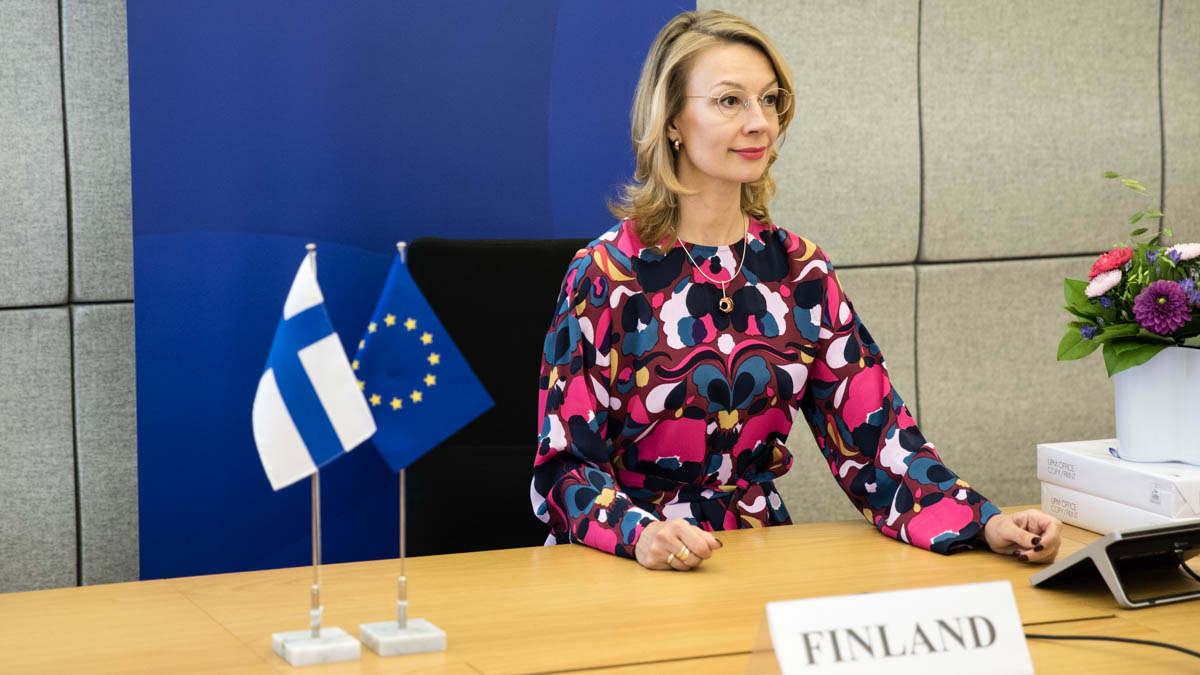
Kuva: Laura Kotila

Minister for European Affairs and Ownership Steering Tytti Tuppurainen's speech in the Annual Meeting of Heads of Mission on the 23rd of August 2021.

Distinguished participants in the Annual Meeting of Heads of Mission,

The public discussion about Finland’s policy on Europe has been overly dominated by the debate on the costs of the recovery instrument and Finland’s status as a so-called net contributor. On behalf of the Government, we have had to take part in this debate. The Government is, of course, very careful about the use of Finnish taxpayers’ money, but focusing on these calculations may distract us from what is really important. It may give some people the wrong idea about the ambitions of Prime Minister Marin’s and the Government’s policy on Europe.

The Government’s view is as follows: Finland’s objective is a strong and united EU with the capacity to solve global problems. We want to advance sustainable development and strengthen the Union’s resilience, its ability to withstand crises.

Finland is a member of the EU so that it can influence political decision-making in Europe. Finland is involved so that it can influence how the world develops. As a member of the EU, and through the EU, we can play a role in ensuring that the major developments in global politics move in the right direction. We express our views and work together with all Member States. We do not define ourselves as part of a block; instead, we foster integrity and work to prevent divisions from becoming entrenched. The Government Report on EU Policy describes our position in its entirety.

Dear Ambassadors,

There is broad consensus in the strategic assessments that the establishment of China as an economically stronger and more empowered entity plays a decisive role in future global development. Will the strengthening of China lead to further polarisation, or will it bring about cooperation that increases wellbeing? Can China be a partner in climate policy?

For Europe, a sharp division of the world between two economic and political camps – the United States and China – would prove fatal. Europe would fall into the rift between them.

Two significant developments have taken place over the past year: the change of power in the United States and the UK’s withdrawal from the EU. My message is this: The EU and the United Kingdom must face China together. The EU, Finland and the United Kingdom share the same interests and values. Together with the United Kingdom, we can advance the transatlantic relationship, which is absolutely integral for us. A particularly important aspect of this is the transatlantic community’s strategy on China. Together with the United Kingdom, the EU must work to influence how the entire transatlantic community relates to China.

Dear Participants,

I will assess our conditions for this in more detail from three different perspectives.

Firstly, the EU must be strong and united in order to have an impact on the world stage. The unity of the EU is based on our common values, and its strength is based on the correct understanding of strategic autonomy and on cooperation with our close partners.

The first fundamental value of the EU is the rule of law. Promotion of the rule of law is enshrined in Finland’s Government Programme, it was highlighted as a priority during our EU Council Presidency, and it is the guiding principle behind the Government Report on EU Policy. We emphasise that a social and economic model based on democracy, human and fundamental rights and the rule of law is the foundation for European states and the European way of life.

The rule of law is about making sure the single market functions smoothly and safeguarding the equity and equality of citizens. It is the force that holds the EU together and maintains our mutual trust. By upholding our values, we can also create a barrier against ideological, authoritarian rapprochement that aims to erode the EU’s ability to function.

Finland has actively highlighted shortcomings in the rule of law and has called on the governments concerned to take responsibility for their actions. We have worked to build a common understanding of why it is important to support the rule of law and fundamental rights.

This starts with our genuine concern about developments in the Member States, and expressing that concern in a straightforward manner. It is equally important to be clear that Finland avoids positions showing certain Member States the door. We believe that membership strengthens peace, democracy and the rule of law in Europe.

In addition to expressing concern and criticism, it is also important to acknowledge progress and recognise common objectives. The recent announcement by Poland’s political leadership about the reform of the judiciary is, at least at first glance, a step in the right direction – although it does not yet give reason to believe that the situation has been rectified. At the same time, the worsening situation in Belarus has underlined the fact that the EU Member States have very strong common interests and shared values. Constructive dialogue with Poland is topical and important: Poland is one of our most significant trade partners, and the country plays a key role in ensuring security in the Baltic Sea region.

Only a European Union that relies on its value base can be a strong and credible global operator.

Dear Friends,

Secondly, the EU must make use of its economic power and its competitiveness, which is based on its strengths. Europe’s strategic autonomy, the strength of the EU economy, is founded on open and rules-based world trade. When it comes to European trade and competition policy, Finland is particularly well placed to advocate for an open global economic system. Imports are Finland’s lifeline, and in order to pay for imports, we need an open market.

Unfortunately, this is not self-evident. The debate on strategic autonomy can easily devolve into making excuses for protectionism.

This means that we must find solutions to prevent the rise of protectionism and the polarisation of the global economy between the United States and China. The United States is our most important partner, but affordable Chinese consumer goods have also helped many European households stave off poverty. At the same time, the Chinese market has attracted investment goods. Finland’s trade is heavily based on this economic model: we export investment goods and intermediate industrial products, and we import consumer goods.

When assessing strategic autonomy, it is wise to recall our recent history with COVID-19. Without global supply chains, it would have been impossible for us to access sufficient protective equipment. Without global vaccine companies, valuable research into the development of new vaccines would have gone to waste. We needed companies with global subcontracting and production chains and the capacity to export ready-made vaccines all over the world.

Looking towards the future, maintaining an open global market is crucial. Instead of 450 million customers, the European pharmaceutical industry needs eight billion customers. Instead of the EU market, the European energy transition needs worldwide subcontracting chains and open global markets in order for the development of new technologies to be worthwhile.

Finland must work to steer the EU’s trade policy towards global transparency and advance our environmental and human rights goals.

Within the EU, Finland needs to focus on competition policy. Until very recently, Europe has been concerned that we do not have our own corporate giants, such as Google or Alibaba, in information technology or other sectors. Companies’ success, growth and ability to conquer markets are good things as such. But we have no reason to worry that European companies haven’t risen to monopoly status. There’s less to envy about the United States than one might think.

In a book published a couple of years ago, Thomas Philippon, an economist who moved from France to the United States, described his new home country as having abandoned the free market economy in favour of monopoly capitalism. The profits of giant companies have transformed functional income distribution into losses for wage earners while stifling growth outside them. Europe has done better in maintaining a competitive market economy. It is worth noting that the present US administration seems to be adopting European ideas here: it does not see companies that monopolise the market as good for the national economy, workers or consumers either.

We must adhere to strict competition policy. We must avoid making the same mistakes as the United States. And if the United States is now moving towards a stronger focus on competition policy, we should not move in the opposite direction.

Only a truly competitive EU can be an economic superpower with global weight.

Dear Friends,

A third point. The United Kingdom is a natural and close partner for the EU, which focuses on multilateralism. The UK’s withdrawal from the EU took four years to materialise, but it is now a fact. It is time to move on from the pain of separation towards day-to-day cooperation. We must resolve the most urgent disputes involving the withdrawal agreement, and we must comply with the agreements we have concluded.

Our shared values and common interests are our greatest assets. With the Global Britain Strategy, the United Kingdom has set its sights on globalisation. The United Kingdom’s long-term interests are the same as those of Europe; the British are a nation of trade. Of course, developing our cooperation requires foresight and patience at the moment, but in the longer term, it is critical.

The EU must strengthen its partnership with the United Kingdom. We must face China together, and together we must encourage the United States to formulate a balanced China policy for the transatlantic community. The EU and the UK have taken a similar approach to China. This provides the conditions for a common China policy focused not only on trade relations but on the ground rules more broadly. This would give the EU more weight in negotiations with the United States.
Despite the changes taking place in the world, the United States is still the most important partner for Europe and the United Kingdom. Global security policy can be conceived in largely the same way as that of the US administration when it comes to interests and values. Regarding security policy, Europe’s commitment to a comprehensive set of transatlantic interests and values must not be called into question. For the United States, a strong and united EU is an indispensable partner. Today, the US needs the EU as its ally, just as Europe needs America.

The democracies of the world, which include the EU Member States, the United Kingdom and the United States, have a great deal in common. Along with our shared values and interests, we also have the resources to achieve our common objectives. In addition to the hard power available to democratic states, they also have large population bases and overwhelmingly large economies. They control the international capital markets, trade and transport. They are the most important implementers of development cooperation.

The challenge for democracies lies in their ability to exercise soft power: democratic values are universal values that also appeal to the citizens of authoritarian states. Democracies can succeed if they themselves believe in these values. It is too early to draw too far-reaching conclusions about the setbacks in Afghanistan. Democratic states must not lose confidence in themselves and in their values. Their weakening influence is not due to any lack of resources but to the deterioration of their values. This cannot be an inevitable development – democracies must work resolutely to defend these values.

Dear Friends,

The confrontation between the United States and China in world politics is an undeniable fact.  Under the Biden regime, it has even escalated. China’s armament – the latest example being the massive strategic missile silo programme – raises deep concern. At the same time, human rights violations in Hong Kong and against the Uyghurs show the enormous differences in our values. Many people believe that development inevitably leads to conflict; in the Thucydides Trap, where conflict between an emerging power and an existing hegemon cannot be resolved peacefully.  
The European Union and the United Kingdom do not want the world to split in two. We will work to promote multilateral, rules-based cooperation. We need to cooperate with China on economic issues, and especially on climate policy. By emphasising our common interests, we can prevent the confrontation from escalating into open conflict.

In other words: the European Union must face China as a united front, with confidence in our values. We must face China as a truly competitive economic superpower, and we must do so together with our partners – above all the United Kingdom.

Thank you.

Tytti Tuppurainen
EU ambassadors confederations of states economy politics

See also

Recovery of Finnish economy delayed

Type:Press release Publication date:18.12.2025 11.00

Draft budget of Minister of Finance Riikka Purra to stabilise the debt ratio; budget deficit to be reduced to below EUR 10 billion

Type:Press release Publication date:6.8.2025 18.24

Economy recovering in the shadow of trade disputes and uncertainty

Type:Press release Publication date:16.6.2025 11.02

OECD recommends Finland strengthen public finances and boost sustainable economic growth

Type:Press release Publication date:23.5.2025 10.00

Government decides on General Government Fiscal Plan for 2026–2029

Type:Press release Publication date:30.4.2025 13.34

A trade war poses a threat to Finland’s economic recovery and its already fragile general government finances 

Type:Press release Publication date:30.4.2025 11.02
Valtiovarainministeriö frontpage Valtiovarainministeriö

Snellmaninkatu 1 A, Helsinki PO Box 28

FI-00023 Government, Finland

Tel. +358 295 16001

About the site

Data protection

Accessibility statement

Sitemap

Questions and feedback

  • Frontpage
  • Areas of expertise
    • Economic Policy
      • Starting points for economic policy
        • General government finances
        • Economic framework
        • Fiscal policy
        • Structural policy
      • Spending limits in central government finances and the budget
        • Central government spending limits
        • The budget
      • EU and the economy
        • European Semester
        • Fiscal rules
        • Budget
      • Assessment and monitoring of central government finances
        • Credit Ratings
        • International comparison of the Finnish economy
      • International Financial Affairs
        • Coalition for Climate Action
      • Discretionary government grants
    • Economic Prospects
      • Economic forecasts
        • Data on contingent liabilities
        • Revenue Working Group
        • Economic trends in construction
      • Descriptions of methods
      • Economic analyses
    • Taxation
      • Tax system
      • Personal taxation
        • Taxation of earned income
        • Taxation of capital income
        • Taxation at source on interest
        • Taxation of inheritance and gifts
        • Taxation of asset transfers
      • Business taxation
      • International income taxation
        • Co-operation in international taxation
        • Tax agreements
      • Real estate taxation
      • Value Added Tax
        • Tax on Insurance Premiums
      • Excise Duty
      • Road transport taxation
      • Customs
      • Tax expenditures
    • Financial Markets
      • Regulation of financial markets
        • Sanctions in the financial markets
        • New financial technologies
      • Stability and supervision
      • Government financial policy
      • Preventing money laundering and terrorist financing
        • Prevention
        • Legislation
    • Governance Policy
      • Openess, trust and ethics
      • Core principles and future of governance policy
        • Futures work and evaluations of governance policy
        • International activities
        • Proactive governance through anticipatory innovation
      • Public Service Leadership
        • Shared values and principles for public service leadership
        • Joint development and events
        • Position and service relationships of senior management
        • Leaders selection and career management
        • Preconditions for succeeding
        • Evidence-based management
        • Support for the senior management in central government
      • Structures, guidance and direction of administration
        • Central government
        • Municipal administration
        • Systems for guidance and direction
      • Management and steering of central government finances
        • Central government financial administration
      • Public services
      • Internal control and risk management
      • Shared government services
        • State properties
        • Government procurement
        • Financial and HR services
        • Education and training services
      • Public sector innovations
    • Local Government Affairs
      • Legislation on municipalities
        • Municipal structure
        • Local government employees
      • Local government’s duties and activities
        • Cooperation between the state and the municipalities
          • Advisory Committee on Local Government Finances and Administration
          • Evaluation of basic services
        • International cooperation
      • Local government finances
    • Wellbeing Services Counties
      • Duties and other activities
        • Wellbeing services counties
        • Cooperation
        • Decision-making
        • Guidance
        • Opportunities to influence and participate
      • Finances of the wellbeing services counties
        • Funding
        • Additional funding
        • Budget and financial plan
        • Investments
      • Negotiations with wellbeing services counties
    • Public Sector ICT
      • Digitalisation
        • Digital services
        • Artificial intelligence and robotisation
          • Guidelines on using generative artificial intelligence to support and assist work in public administration
        • Digitalising and automating life and business events
          • Programme to promote life event based digitalisation
            • Questions and answers regarding life event based digitalisation
          • Easing the management of the affairs of a deceased relative
            • Frequently asked questions about the programme to ease the management of the affairs of a deceased relative
        • Priority of digital communications by public authorities
      • Information policy and steering
        • Information management map of public administration
        • Information policy report
        • Open data
        • Architectures
        • Project on redesigning the system of personal identity codes
        • Government policy programmes
          • Opening up and using public data
        • Steering of information management in public administration
          • Advisory boards on information management in public administration
        • Ethical Guidelines for AI in Public Administration
        • Interoperable Europe
      • Information security and cybersecurity
      • International cooperation on digitalisation and ICT
      • Information Management Board
    • Government as Employer
      • Collective Bargaining
        • Industrial peace
        • Agency-level collective bargaining 
        • Local union representatives
        • Occupational health and safety 
        • Cooperation
      • General collective agreements for government 
      • Terms and conditions of employment relationship
        • Pay, incentive schemes
          • Pay system in central government
          • Performance-related pay
          • Employees' mutual funds
        • Working hours
        • Annual leave
        • Official journeys
        • Absence
        • Benefits in kind
        • Occupational health care
      • Guidelines and regulations
      • Civil service law
      • Values and civil service ethics
        • Advisory Body on Civil Service Ethics
      • Support for personnel management
        • Central Government Human Resources Strategy
        • Personnel planning
        • Multi-location working in central government
        • Recruitment
        • Competence development
        • Personnel rotation and exchanges of public officials
        • Equality and equity
        • Tools and methods
        • Central government medals of merit for public officials
      • State personnel as statistics
  • Current issues
    • News archive
    • Russian Attack on Ukraine
    • Sustainable Growth Programme for Finland
      • Finland’s Recovery and Resilience Plan
        • Green transition
        • Digitalisation
        • Employment and skills
        • Health and social services
        • REPowerEU
      • Process
    • Sign up for news
  • Projects and legislation
    • Coordinating services and premises
      • Reshaping of regionalisation
      • Renewal of central government’s service and premises network in 2020s
        • Frequently asked questions about the renewal of the services and premises network
        • Regional progress of the reform
    • Project to implement the reformed eIDAS Regulation nationally
      • European Digital Identity Wallet
        • Questions and answers about the European wallet application
        • Piloting European Digital Identity Wallet
    • ProcurFinland – making public procurement more effective
      • National Public Procurement Data Repository
    • Coordination Group for Digitalisation
      • Advisory boards
      • Digital statutes in the EU
    • Development of internal control and risk management
    • Opening up and using public data
    • Project to implement the gambling system reform
    • Reform of regional state administration
    • Tourist tax
  • Publications
    • Web publications
      • Economic Survey, Autumn 2025
      • Economic Survey Winter 2025
  • Ministry
    • Task and objectives
    • Management and organisation
      • Ministers
        • Minister of Finance
        • Minister of Local and Regional Government
        • Minister of Economic Affairs
      • Management
      • Departments
    • Boards
      • Finnish Productivity Board
        • Board members
    • Ministry of Finance's branch of government
      • Agencies
      • State-owned companies and unincorporated State enterprises
      • Funds
    • Whistleblower protection
    • Ministry as a workplace
    • History
  • Contact information
    • Contact information and visiting address
    • Personnel search
    • Media and Communications Unit

Contact