
Public services

Government at all levels provides public services to customers through a variety of channels. A customer-oriented and consistent multichannel customer service is the goal of the Ministry of Finance, which is bringing together and developing services for this purpose.
Multichannel service provision
The idea is to have a service structure that includes more digital public services and to organise customer service in a new way. Expanding and improving e-services and bringing together customer service arrangements will make it easier and more convenient for customers to find the services they need without always having to contact or visit the service provider directly in the conventional way. The development focus is therefore strongly on digital public services, and there is also considerable scope for further developing phone services and joint customer service points (one-stop shops for public services).
Public services are provided as online services, phone services and in-person services.
Online services
The aim is to transition to online services as far as is possible and productive in all matters concerning important life situations for individuals and different development stages for businesses. These kinds of public services for individuals and businesses can be found centrally on a single website: Suomi.fi. This includes information services and access to the necessary forms to complete for different services.
Phone services
Phone services are a familiar channel that the public can use to contact public service providers conveniently from any location. Most agencies and authorities have adopted nationwide service numbers and established customer service centres, allowing callers to get expert assistance over the phone.
In-person services and one-stop shops
The current network for in-person services mainly consists of the separate networks of individual government authorities. In recent decades, these separate networks have been supplemented by one-stop shops that the authorities have established together. A one-stop shop is a way of delivering public and other services in a centralised manner from one location. This is based on cooperation and voluntary agreements between public authorities. One-stop shops are being developed in a project concerning the reform of the central government’s service and premises network.
The framework for developing joint customer services is established by law in the Act on Joint Services in Public Administration (223/2007). The act was most recently amended in 2017. The act provides a firm basis for further digitalisation and the development of digital public services. The underlying principle of the Act is contractual cooperation between public sector authorities. The objective is that joint services should follow consistent practices and should also highlight the role of digital public services and the related advice and support.
The Act also allows joint services to be provided in other ways than from the fixed premises of one-stop shops. Such options could include a mobile service from vehicles travelling predetermined routes, or online service support provided as a home service. In addition, the Act aims to ensure observance of a cost-pricing principle when it comes to apportioning the costs incurred in the joint provision of one-stop shop services.
As the number of visits to in-person services declines significantly in the future, it will not be viable for public services to each have their own individual customer service points. The regional availability of services across the country can best be ensured if customer services are brought together. New types of joint service arrangements are needed that can be provided together by the central government, the Social Insurance Institution of Finland, wellbeing services counties and municipalities as well as the private sector. A productivity analysis commissioned by the Ministry of Finance looked at how more efficient and higher quality public services could be provided in the late 2020s by making extensive use of digital services and channels. Based on the analysis, the Ministry of Finance conducted a study looking at the network of central government premises and developing the network of one-stop shops for public services in the 2020s covering all levels of government. The project published its final report in May 2020 entitled ‘Towards an integrated public sector customer service network 2030’. The report was used as the basis for a project launched in 2021 to reform the central government’s service and premises network by 2030. The goal of the reform is to respond to rapid changes in the operating environment. This will be achieved by bringing together in-person services in joint public sector customer service points and by reducing the number of central government premises. The first one-stop shops were opened in 2023.
Using one-stop shops
The aim is that central government services should be provided comprehensively as e-services but also complemented by in-person services. The in-person visits of the future will focus on multi-sectoral services, digital support and use of remote services. At one-stop shops, customer service advisers will provide guidance on public services and support in using electronic services. People will be able to meet with public authority personnel at one-stop shops or use customer terminals independently. Service points established under the Act on Joint Services in Public Administration function on the same principles.
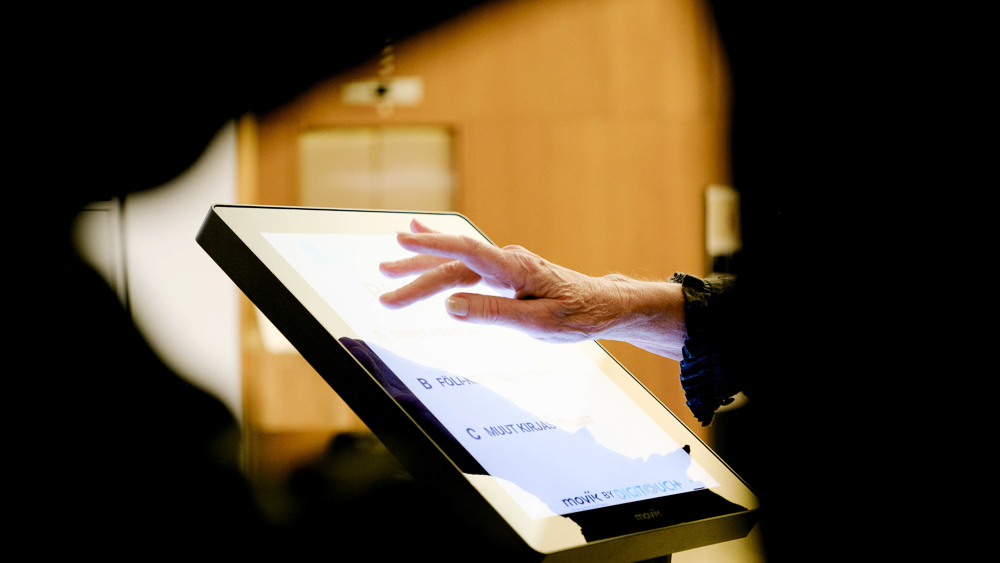
Renewal of central government’s service and premises network
The central government’s in-person services will be brought together into joint customer service points (Suomi-piste), and government agencies and public bodies will move into shared premises during the 2020s.
Renewal of central government’s service and premises network

Suomi.fi
Suomi.fi Web Service helps citizens and entrepreneurs in different situations. In Suomi.fi, the information, instructions and services you need to take care of matters have been compiled in one address.

Digitalisation
Finnish society is currently undergoing a transition that includes big structural reforms. One framework for the changes is provided by digitalisation.